Skip to content
Prototype — in the loopPrototype 001

OURO 001

The first revolution of the loop.

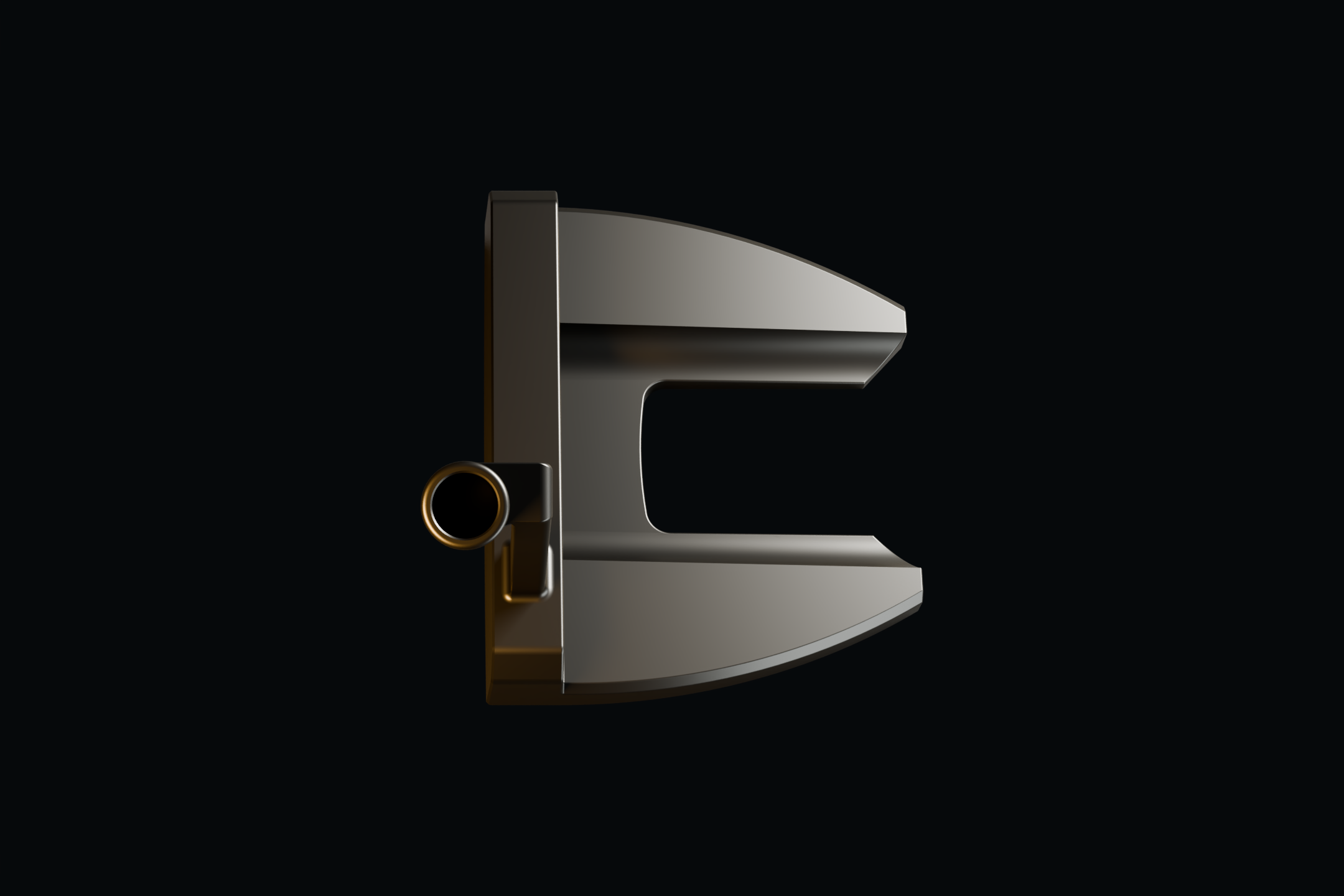
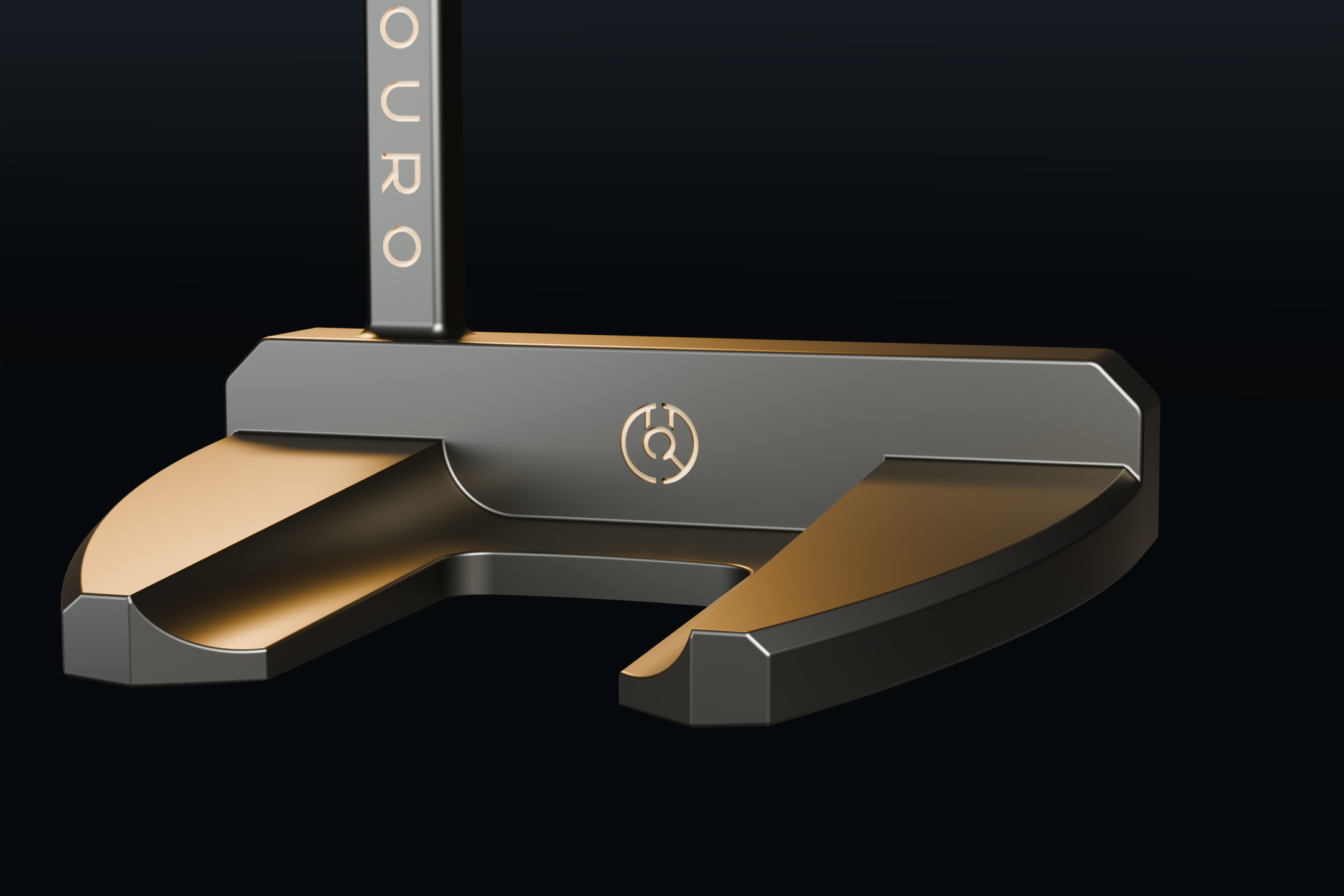
A compact mallet built around the player's sightline. The plan is for every alignment feature on 001 to go through a controlled aim study before it ships — face angle measured in degrees, across real golfers, compared against benchmark putters. This page updates as the data arrives.

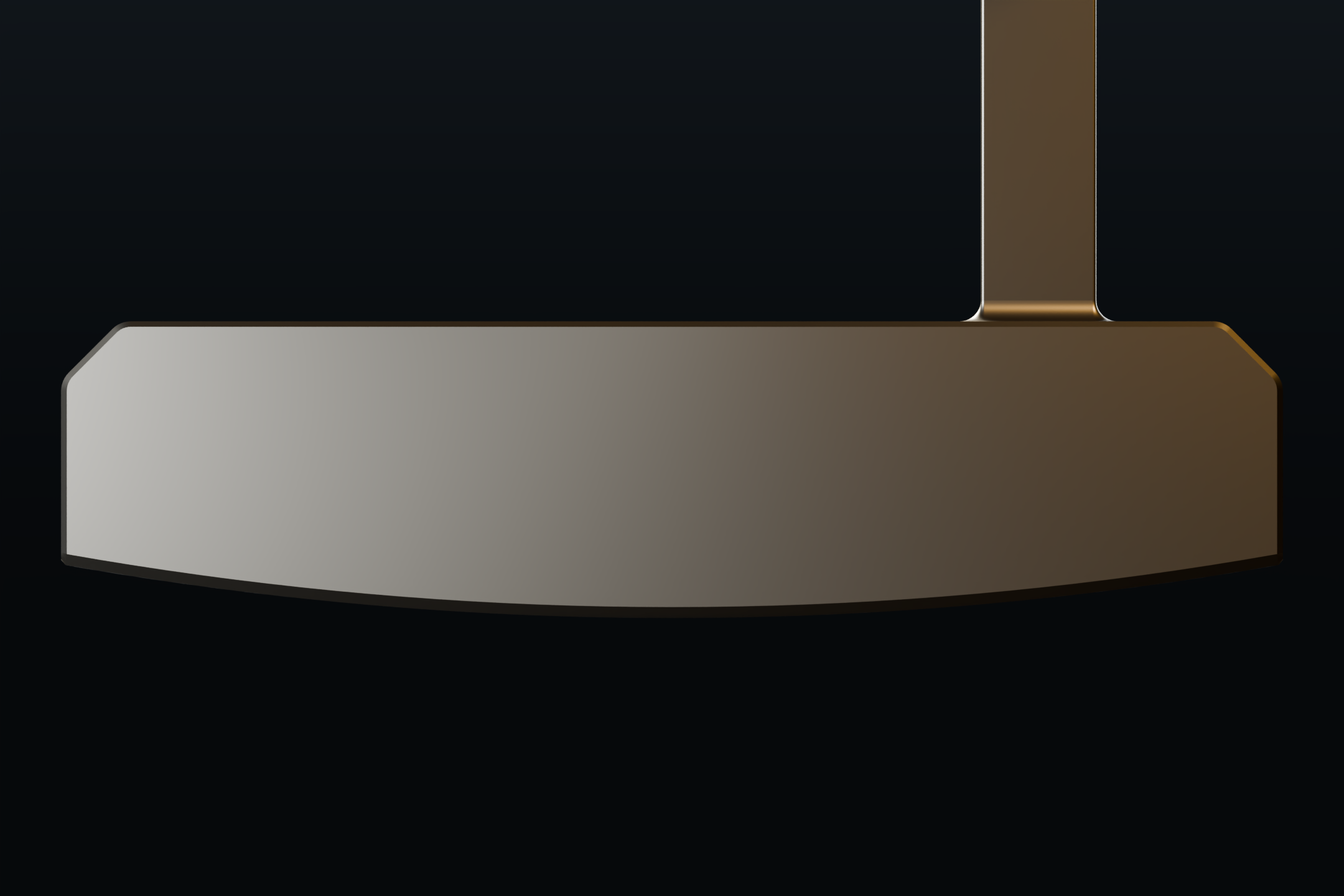
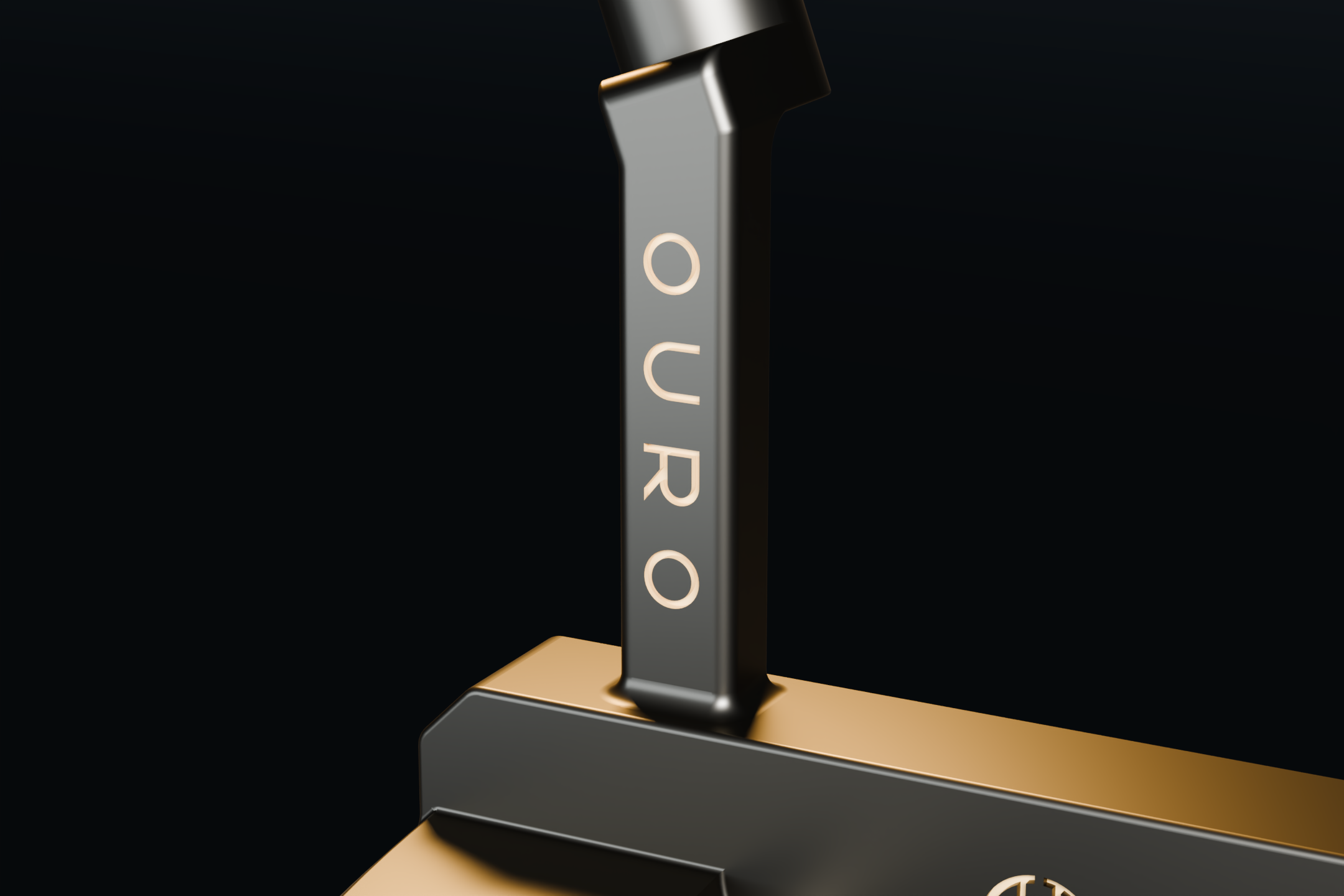
Head design is in CAD and alignment-study validation. The images and interactive model below are CAD renders — real machined-billet photography replaces them as the prototype comes off the machine.

02Engineering story

Nothing is meant to reach steel because it’s fashionable. The aim is for it to reach steel because it held up through the loop.

Start from the miss

001 began as an error budget, not a shape.

Published aim-study literature is blunt about where putts die: misaim of a degree or more at address is commonly reported among golfers, well inside a tolerance a straight twelve-foot putt can't afford. That's context from the literature, not an OURO test result — but it set the design brief for 001 backwards from the miss: give the player's eyes the best possible chance of setting the face square before the stroke ever begins.

Perception is the first constraint

Before a single curve was drawn, we mapped the visual problem. How eye dominance shifts perceived line. How parallax moves an aim point when the eyes sit inside or outside the ball. How contrast and edge geometry pull the gaze. That map — not styling — set the head's proportions, the topline treatment, and the candidate sightline systems now under study.

The alignment system on 001 is not being finalized by opinion. The first study has already run: a geometry screening across bare heads — no sightline, no mark — found wing forward-sweep angle to be the dominant geometric influence on where golfers aim at address. That result informs 001's current CAD direction and starting geometry, which remains subject to prototype evaluation, design-for-manufacture, sightline testing, and further validation before anything is called final. The write-up, charts included, lives in the journal. Next, candidate sightline configurations go through a controlled aim study on that starting geometry: face angle at address, measured in degrees, across real golfers, compared against benchmark putters. Whether a given configuration measurably improves static aim is the question that study is designed to answer — not an outcome assumed in advance.

Sound is a specification

Impact sound and post-impact vibration are believed to be major contributors to perceived feel. Impact is understood to last under half a millisecond — likely too brief for the hand alone to resolve — while the ear can pick up considerably more detail in the strike. So 001 treats sound as a design variable worth measuring, not an afterthought. Prototype heads will have their acoustic signatures measured — spectrum, loudness, decay — with the geometry and milling adjusted toward a sound that reflects the strike rather than dresses it up: the aim is for center strikes to sound like center strikes.

Why milling is the plan

001 is a mallet, machined from solid billet. The current development plan is to cut the critical surfaces — face, sightlines, engraving — in a single setup, a proposed manufacturing approach intended to hold the geometry the aim study is meant to validate. A sightline that drifts in manufacturing could undermine the research behind it, which is why dimensional inspection against the drawing will be verified before production.

First articles will come off the machine, get measured against the drawing, and the numbers will land on this page — tolerances included. Until then, every figure above is labeled for what it is: a target.

What happens next

The loop runs: aim-study of the alignment system, first billet prototypes, acoustic measurement, player testing. Each pass updates this page. No number appears here until it's been measured.

03Specifications

The numbers, as they stand.

Head

Construction
One-piece, CNC-milled from billet
Material
1018 carbon steel
Head weight
375 g (target)
Finish
TBD — glare-tested at address

Geometry

Loft
3.0° (target)
Lie
70° (target)
Length
33" / 34" / 35"
Toe hang
TBD by fitting study

Alignment system

Sightline system
Under aim-study validation
Validation question
Whether the sightline system improves static aim vs. benchmark — a planned test question

Manufacturing

Critical surfaces
Single-setup milling (proposed manufacturing approach)
Face tolerance
Published when first articles are inspected
Build record
Dimensional inspection against the drawing is a planned production control, to be verified before production

All values are design targets. Measured numbers replace them as prototypes come off the machine — we publish what we verify, nothing sooner.

04Testing & proof

If we make a performance claim, it must trace to a measurement.

Aim & alignment — head geometry

Measured

Screening study isolating how mallet head shape alone biases static aim, with all sightlines and alignment aids removed. Wing forward-sweep angle proved the dominant factor; flange depth and topline thickness showed no measurable effect. Full write-up in the journal.

Aims recorded
3897 golfers, 10 test heads, randomized order
Face-angle resolution
~0.02°Overhead machine-vision gauge
Wing sweep effect (20°→30°)
0.38° squarerMixed-effects model, p = 5.3×10⁻⁵; robust across sensitivity checks

Method · 2⁴⁻¹ fractional-factorial screening DOE across four geometric factors; face angle measured at address by validated machine-vision gauge.

Updated 2026-07-14

Aim & alignment — sightline

In progress

The geometry-track results now inform the current CAD direction and starting geometry — subject to prototype evaluation, design-for-manufacture, sightline testing, and further validation. Next, a controlled aim study of candidate sightline systems on that starting geometry. Face angle at address will be measured in degrees across golfers of mixed handicap, compared against benchmark putters.

Numbers appear here when the study is done — measured, not promised.

Method · Optical face-angle measurement at address; repeated-measures design across candidate and benchmark heads, on the current starting geometry.

Updated 2026-07-14

Acoustic signature

Planned

Impact sound of each prototype will be measured with calibrated instrumentation — spectrum, loudness, and decay — then used to guide geometry and milling. Target: a sound that reflects strike quality rather than dressing it up.

Numbers appear here when the study is done — measured, not promised.

Method · Calibrated microphone capture of center and off-center strikes; spectral analysis.

CG & MOI

Planned

Center of gravity and moment of inertia verified against the CAD model on first articles. Published as measured, alongside the design targets they're checked against.

Numbers appear here when the study is done — measured, not promised.

Method · Physical measurement on first articles, compared to CAD-predicted values.

Machining tolerances

Planned

Each head is intended to be inspected against its drawing — face flatness, loft, lie, and sightline position — and logged to a build record. First-article inspection numbers will appear here when the prototype run completes.

Numbers appear here when the study is done — measured, not promised.

Method · First-article inspection; per-head build record.

05Follow this build

OURO 001 is in the loop.

Follow the engineering journal — studies, machining, failures and all — and be first in line when it's ready.

No spam. Just the build.